
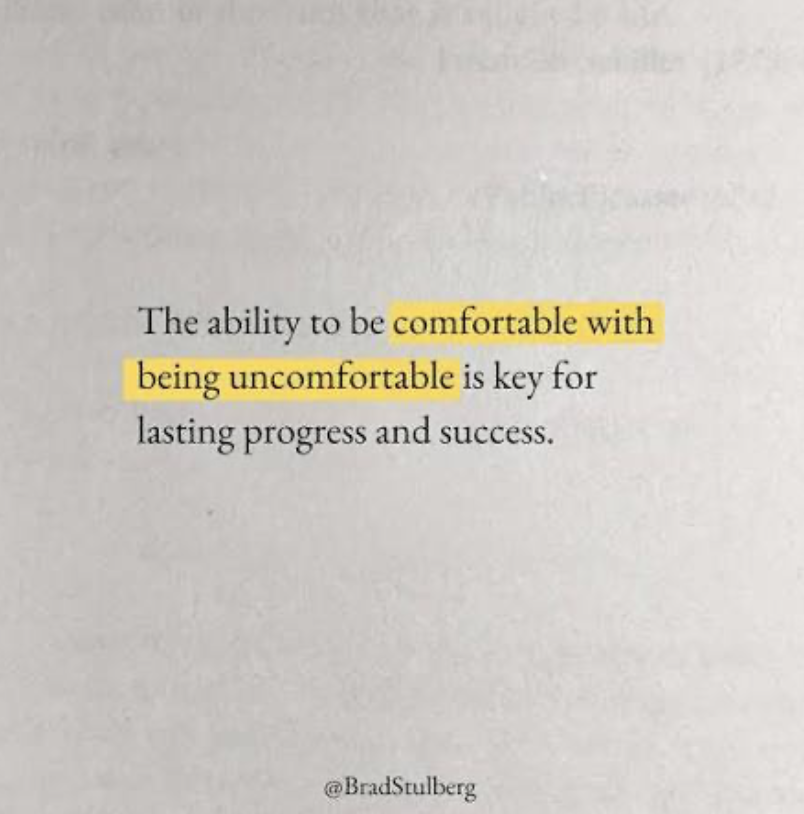
Getting comfortable with being uncomfortable is one of the most important skills a salesperson can develop because meaningful improvement in sales rarely happens when everything feels familiar. At Now & Co, our face to face sales environment gives people the opportunity to challenge themselves, learn through real conversations and build confidence by repeatedly stepping outside their comfort zone.
Sales is a career built around interaction, adaptability and continuous development, which means that there will always be moments when something feels unfamiliar. Whether it is approaching a new customer, handling an objection, learning a new campaign or taking responsibility for a larger territory, the situations that initially create the most discomfort can often become the experiences that produce the greatest development.
What does being uncomfortable have to do with sales?
Being uncomfortable in sales usually means being placed in a situation where your existing knowledge, confidence or experience is being tested, and that is often where the most valuable learning takes place.
At Now & Co, field sales puts people into real conversations where every customer is different and every interaction requires a slightly different approach. A salesperson cannot rely on exactly the same conversation every time, which means that adaptability becomes just as important as product knowledge.
The more often someone experiences these situations, the more capable they become of handling them. What once felt unfamiliar gradually becomes part of their normal working environment.
Comfort comes from repetition. Confidence comes from experience.
Why does stepping outside your comfort zone improve sales performance?
Stepping outside your comfort zone improves sales performance because it forces people to develop skills that cannot be fully learnt through theory alone.
A training session can teach someone how to structure a conversation, ask effective questions or respond to an objection, but field sales provides the opportunity to apply those skills with real customers. Each interaction creates another opportunity to understand what works, recognise what could be improved and make a better decision the next time.
There are three areas where this becomes particularly important:
Communication
Salespeople become better communicators when they regularly interact with different personalities, communication styles and customer needs.
Resilience
Regular exposure to rejection helps salespeople understand that one unsuccessful conversation does not define their ability or their potential.
Adaptability
Every customer conversation is different, so successful salespeople learn to adjust their approach rather than relying on a single script.
Why is rejection important for developing confidence in sales?
Rejection is important because it teaches salespeople to separate an individual outcome from their overall ability, allowing them to remain focused on improvement rather than becoming defined by a difficult conversation.
In face to face sales, hearing no is an unavoidable part of the role, but it does not have to be a negative experience. A salesperson who learns to review an unsuccessful interaction can identify whether the issue was their approach, timing, communication or simply that the customer was not interested.
That process turns rejection into information.
At Now & Co, this is where coaching becomes particularly valuable because a salesperson does not have to work through every challenge alone. Feedback can help identify opportunities that may not be obvious when you are still developing your own sales approach.
How does coaching help people become more comfortable?
Effective sales coaching does not remove challenges from someone’s development. Instead, it gives people the tools, feedback and support they need to approach those challenges with greater confidence.
A strong coach understands that development is individual. One person might need encouragement to become more confident when approaching customers, while another might need to improve their questioning, listening or ability to handle objections.
The goal is not to make sales comfortable. The goal is to make people more capable of handling what sales requires.
This is an important distinction within the Now & Co approach to development because the objective is not simply to improve today’s performance. It is to build skills that continue to create opportunities tomorrow.
What happens when you stay inside your comfort zone?
Staying inside your comfort zone can make sales feel predictable, but it can also limit the rate at which a salesperson develops because familiar situations rarely require new skills or behaviours.
Someone might become very comfortable having the same conversations, working with the same approach and achieving the same level of performance, but progression often requires something different. That could mean taking on a new responsibility, learning from someone more experienced, approaching a different type of customer or simply challenging yourself to improve something you already do well.
Growth usually begins where certainty ends.
How can salespeople become more comfortable with being uncomfortable?
The most effective way to become comfortable with discomfort is to treat challenging situations as part of the development process rather than as evidence that you are not good enough.
At Now & Co, this can mean focusing on the quality of each conversation rather than expecting every interaction to produce the perfect result, actively seeking feedback from experienced team members and setting personal targets that encourage consistent improvement.
A useful approach is to ask yourself three questions after a difficult interaction:
- What happened?
- What could I have done differently?
- What will I do next time?
This turns experience into development, which is one of the most valuable habits a salesperson can build.
Why does discomfort matter for long term sales development?
Discomfort matters because sustained sales development depends on a person’s willingness to keep learning after they have become competent at the basics.
The strongest salespeople are rarely the people who never feel nervous, uncertain or challenged. They are often the people who have learnt how to continue performing even when those feelings are present.
At Now & Co, we believe that confidence is not something you simply have. It is something you build through experience.
Every new conversation, every difficult objection, every piece of coaching and every moment that pushes someone beyond what they thought they could do contributes to that development.
The next time something feels uncomfortable, it may be worth asking a different question.
Not “Why am I struggling with this?”
But “What is this situation teaching me?”
Because in sales, the moments that challenge you today can become the skills that separate you tomorrow.
